Bar With Private Room Advantages for Client Entertainment
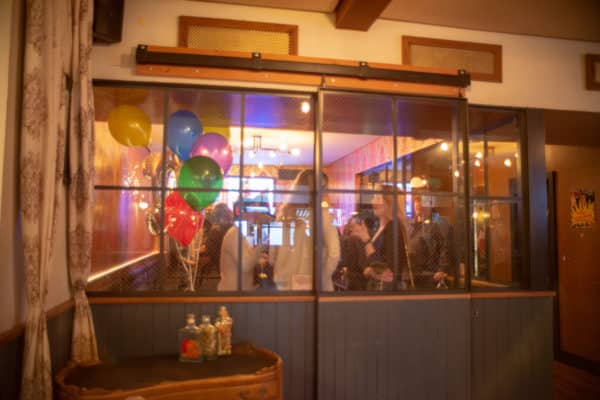
Client entertainment is rarely about the drink, the menu, or even the venue by itself. It is about control. Control over tone, noise, timing, privacy, service, and the subtle social cues that shape how people feel in a room. That is why a Bar With Private Room often outperforms a standard restaurant reservation or an open lounge booking when the goal is to build commercial relationships.
I have seen deals move forward in spaces that were not especially glamorous, but were managed well. I have also seen expensive dinners stall because the table was squeezed between a birthday party and a loud speaker system. When you are hosting clients, the room does more than hold the meeting. It either supports the conversation or works against it.
A private room inside a bar sits in a useful middle ground. It has more warmth than a boardroom, more discretion than a public bar area, and usually more flexibility than a formal dining room. For companies that want to entertain without making the event feel stiff, it can be one of the smartest venue choices available.
The setting changes the quality of the conversation
Most client entertainment succeeds or fails on one practical point: can people actually talk comfortably? That sounds basic, yet it is often overlooked. Open bars are designed for energy. Energy is good for atmosphere, but not always for trust-building. If guests need to lean forward, repeat themselves, or pause every few seconds because the room is too loud, the evening becomes work.
A private room solves that immediately. The conversation can stretch naturally. People stop performing for the room and start speaking more freely. That matters when the meeting is not just social, but commercially significant. Pricing concerns, implementation worries, internal politics, leadership changes, and procurement obstacles often surface only when clients private event bar feel they can speak candidly.
The difference becomes obvious about thirty minutes in. In an open venue, guests tend to stay on safe topics. The talk is pleasant but shallow. In a private room, especially once the first drink arrives and the pace settles, the discussion often gets more useful. People ask the question they did not want overheard. They mention the real decision-maker. They admit where a project is getting stuck.
This is not about secrecy in a dramatic sense. It is about reducing friction. Good client entertainment should make serious discussion easier, not harder.
Privacy without the stiffness of a formal meeting room
Conference rooms have their place, but they carry baggage. Even a well-designed one signals agenda, hierarchy, and scrutiny. That is useful for a negotiation or presentation, less useful for relationship building. A bar private room softens that edge.
Clients often relax faster in a hospitality setting because it feels less like being managed. There is usually better lighting, more comfortable seating, and a more natural rhythm to the evening. Service interrupts at sensible intervals rather than the hard stop of a scheduled meeting. That environment encourages openness while preserving discretion.
This combination is especially helpful when the relationship is still developing. If you are hosting a prospective client, a private room can create a sense of care and professionalism without making the occasion feel heavy. It says that you planned thoughtfully, but not theatrically. That tone is hard to get right in very formal spaces.
It also helps when multiple personalities are involved. Senior executives, procurement leads, technical stakeholders, and account teams do not all respond to the same atmosphere. A private room can accommodate both business conversation and social ease, which is why it works so well for mixed groups.
Noise management is not a detail, it is a business advantage
People underestimate how expensive bad acoustics can be. If you host six clients and your team cannot hold a clean conversation, you may lose the chance to understand what matters to them. You are paying for food, drinks, and staff time, yet the main reason for being there is undermined.
Private rooms do not guarantee silence, but they usually offer a much better acoustic environment. Doors, partial separation, soft furnishings, and distance from the main bar all help. Even when there is music elsewhere in the venue, the room often remains calm enough for layered conversation.
That matters more than ever when client groups include people from different backgrounds, accents, or hearing profiles. Some guests are perfectly comfortable in a loud room. Others struggle, especially after a long travel day or in a second language. Choosing a private room removes a barrier that your guests may never mention out loud, but will absolutely feel.
I once attended a client evening where the host had booked a popular bar known for atmosphere. The place looked excellent on paper. By 7:30 p.m., the music had risen, a standing crowd had formed near the table, and half the group had given up on discussing the actual project. The host later admitted they should have paid the extra room fee for the private space upstairs. It would have cost less than the follow-up meeting they had to schedule the next week to cover what should have been discussed that night.
Hosting becomes more deliberate and less reactive
A host has two jobs during client entertainment: make guests feel comfortable and steer the flow of the evening without making that steering visible. In a public space, that can be difficult. Staff may be stretched across the venue, seating can shift, surrounding noise changes, and unplanned interruptions are common.
A Bar With Private Room gives the host more command. Service tends to be easier to coordinate. You can time drinks, starters, or shared plates to create natural pacing. You can decide whether the room should feel lively or more intimate. If someone needs to arrive late, take a private call, or step out briefly, the disruption is limited.
This control becomes especially valuable when the entertainment has a commercial purpose beyond pure hospitality. If you need ten minutes at some point to toast a milestone, acknowledge a partnership, or quietly address a project issue, the room gives you options. You do not need to fight the venue to create the right moment.
Hosts also benefit from reduced social strain. In an open venue, part of your attention is always on the wider environment. Are we in the way? Can everyone hear? Is service too slow? Is the neighboring group becoming louder? In a private room, more of that mental load drops away, which lets you focus on the clients themselves.
It supports different kinds of client occasions
Not every client event should look the same. A renewal celebration, a first meeting after contract signature, a year-end thank-you, and a delicate recovery conversation each call for a different tone. The private room format is flexible enough to handle all of them.
For a new client relationship, it offers warmth and professionalism without feeling transactional. For an existing account, it creates a setting where stronger personal rapport can develop. For a high-value or sensitive relationship, it protects discretion. For a mixed group that includes both commercial and technical participants, it leaves room for the evening to move between shop talk and lighter conversation.
This versatility is one reason so many experienced account leaders prefer private rooms over fully private dining or large open reservations. A restaurant can become too structured. A public bar can become too exposed. A private room in a bar often lands in the practical middle.
That middle ground also works well across industries. Law firms use these spaces for referral dinners. Agencies use them for campaign debriefs and prospect hosting. Technology companies use them for partner meetings after conferences. Financial services teams use them for quieter relationship management. The common thread is not the sector, but the need for conversation that is relaxed, confidential, and well-hosted.
The impression of thoughtfulness matters
Clients notice when a host has anticipated their comfort. They notice when the room is easy to find, when coats have a place to go, when the seating makes sense, when the noise level is manageable, and when service appears without constant flagging. These are small things individually. Together, they shape how professional the evening feels.
A private room signals that the event was not thrown together at the last minute. It communicates intention. That is particularly important when entertaining senior stakeholders who see many invitations and can tell the difference between routine expense-account hospitality and genuine planning.
There is also a subtle status element at work. Without being flashy, a private room creates a sense that the guests matter. They are not just part of the general crowd. They have been given a dedicated space. Done well, that feels respectful rather than indulgent.
This only works if the room itself is appropriate. Not every private room is an asset. Some are windowless boxes with no atmosphere, poor service access, and furniture that feels borrowed from a training facility. A private room should still feel connected to the bar's hospitality DNA. The best ones retain the energy of the venue while insulating the group from its distractions.
Practical advantages that show up before and after the event
The benefits are not limited to the hours spent with clients. Much of the value appears in the planning stage and the follow-up.
Before the event, private rooms often make logistics cleaner. Venues can usually offer clearer minimum spends, simpler package structures, and a more dependable layout. You know the group will not be split awkwardly across multiple high tables. You know where introductions will happen. You know where to place materials if needed, or where gifts can be discreetly set aside.
After the event, the quality of the interaction tends to be easier to assess. If the room enabled stronger conversation, your team will leave with better intelligence and a clearer sense of relationship momentum. That is one of the less glamorous but most valuable outcomes of good client entertainment. It is not just whether people had a pleasant evening. It is whether your team learned something useful about the account.
I have seen this repeatedly with multi-stakeholder groups. In open venues, teams often come away remembering fragments. In private rooms, they remember actual concerns, side comments, future opportunities, and personality dynamics. The room helped those things surface.
Cost needs context, not a knee-jerk reaction
One hesitation companies have about booking a private room is cost. Sometimes there is a room hire fee. More often there is a minimum spend, and in prime locations that can be significant. It is reasonable to ask whether the premium is worth it.
The right comparison is not private room versus cheapest available venue. The right comparison is private room versus the value of the relationship and the likely outcome of the gathering. If you are hosting a low-stakes social evening for a broad contact list, a semi-private area may be enough. If you are entertaining a decision-making group tied to meaningful revenue, the extra cost is usually easy to justify.
A practical way to think about it is this:
- If the event depends on real conversation, privacy has tangible value.
- If senior stakeholders are attending, predictability matters more than novelty.
- If your guest list includes mixed roles or sensitive topics, separation is worth paying for.
- If the evening is mainly casual celebration, a fully private room may be unnecessary.
- If the venue's private room feels inferior to the main space, do not book it just for the label.
That last point is important. "Private" should not mean "banished." Sometimes the main room has all the character while the private area feels stale. In those cases, a carefully chosen corner in a quieter venue can outperform a disappointing enclosed room.
Service quality often improves in a dedicated space
Hospitality teams generally perform better when they can anticipate a group's needs. A private room gives them structure. They know the guest count, the host, the timing, and often the purpose of the event. That lets them deliver smoother service than they might in a fast-moving open floor.
For the client, this shows up as ease. Drinks arrive without delay. Empty glassware disappears. Shared plates are timed sensibly. Dietary preferences are handled discreetly. The host is not constantly scanning for staff. This may seem secondary to the relationship itself, but it affects the whole mood of the evening.
Poor service creates drag. Good service creates confidence. It reassures guests that they are in capable hands. That reassurance reflects on the host company, whether fairly or not.
A dedicated room also makes it easier to brief the venue in advance. If one guest does not drink alcohol, if another prefers early departures, if you need a certain seat for a senior person with hearing considerations, the staff can usually accommodate that more effectively in a contained setting.
It protects against common hosting mistakes
Open venues invite a particular set of errors. Bookings become too loose. Group size drifts. Late arrivals create chair shortages. Music changes. Service thins out at peak times. People split into separate conversational clusters and never reconnect. None of these problems are catastrophic, but each one chips away at the point of the evening.
A private room does not solve everything, but it reduces the odds of small issues multiplying. It creates boundaries, and boundaries are useful in hospitality. People know where to gather. Staff know whom they are serving. The host knows what has been promised.
There is also less reputational risk. If your clients include public figures, confidential advisers, or competitors attending the same event, the room helps avoid awkward sightings and overheard conversations. That can be essential in industries where discretion is part of the service.
What to look for before booking
The phrase Bar With Private Room can cover a wide range of experiences, from polished hospitality spaces to little more than partitioned overflow areas. Vetting matters. Photographs are helpful, but they rarely tell the full story. If the event is important, call the venue or visit in person.
Pay attention to the room's relationship with the rest of the property. Is it close enough to benefit from atmosphere, but separate enough to preserve conversation? Does it have dedicated service access, or will staff be weaving awkwardly through guests? Are the seats comfortable for two or three hours? Is the room pleasant when only half full, or does it feel empty unless packed?
A few checks save trouble later:
- Ask about actual noise levels at the time your group will attend, not just at booking time.
- Confirm whether the room is fully private, curtained, or semi-private.
- Clarify minimum spend, service charge, cancellation terms, and end time.
- Request sample food and beverage formats that suit conversation, not just volume.
- Check whether presentations, toasts, or light branding are permitted if needed.
That last point can matter more than expected. Some client events are mostly social, but still benefit from a two-minute thank-you or milestone acknowledgment. A venue that can accommodate that gracefully is more useful than one that treats every request as a disruption.
The best evenings feel easy, even when they are carefully engineered
Good client entertainment should never feel engineered from the guest side. It should feel generous, relaxed, and well judged. That apparent ease usually comes from careful decisions behind the scenes, and venue choice is one of the most important.
A bar private room helps create that ease because it aligns hospitality with business reality. Clients want to enjoy themselves, but they also want to be heard. Hosts want warmth, but they also need reliability. Teams want memorable settings, but they need a room that lets relationships deepen rather than stall.
There is no universal answer for every client event. Sometimes a long lunch is better. Sometimes a private dining room suits the tone. Sometimes a lively public bar is exactly right for a celebratory crowd. But when the evening calls for discretion, comfort, and real conversation, a Bar With Private Room is hard to beat.
It gives the host room to host properly. It gives clients space to speak freely. And in client entertainment, those two advantages often matter more than any menu item or cocktail list ever could.
The Winslow
Address: 243 E 14th St, New York, NY 10003
Phone number: +12127777717
FAQ About Bar With Private Room
Which bars in NYC offer private rooms?
Many bars in New York City offer private and semi-private rooms for parties and events, ranging from hidden basement speakeasies to upscale lounge spaces. Top options include The Back Room on the Lower East Side, Dear Irving Gramercy, Pebble Bar in Midtown, Mister Paradise in the East Village, and The Winslow in the East Village.
What is a private room in a pub called?
A small, private seating area or partitioned booth in a traditional pub is most commonly called a snug. Larger private rooms used for events, parties, or dining are typically referred to as private dining rooms, function rooms, or back rooms.
How much does a 2 hour open bar cost?
A 2-hour open bar generally costs between $15 and $45 per person, depending heavily on the quality of alcohol you choose. For a standard group of 100 guests, this translates to an overall cost of $1,500 to $4,500 before taxes, setups, and staff gratuities.