What to Expect From a Premium Gin Bar NYC Experience
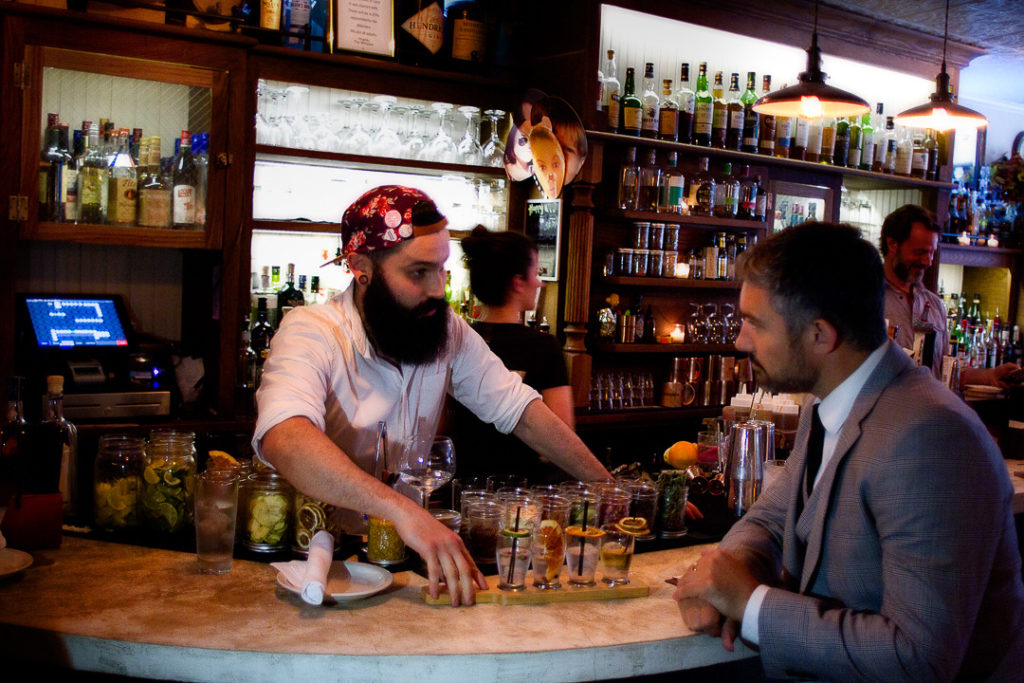
New York has never lacked for places to drink well. The city rewards curiosity, and nowhere is that more obvious than in its better gin bars. A premium gin bar in NYC is not simply a room with a long bottle back and a few respectable martinis. At its best, it is a highly tuned environment where spirits knowledge, ice quality, glassware, service rhythm, and menu design all work together. You notice it within minutes, often before the first sip.
That difference matters because gin can be misunderstood. Many people still associate it with one-note juniper, an overly sharp martini, or a spirit their grandparents ordered. Spend one evening at a serious gin bar, though, and the category opens up fast. You taste citrus-led London dry expressions, floral contemporary gins, savory coastal bottlings, herbaceous local releases, and barrel-rested styles that hold up in colder weather. A premium bar knows how to guide that range without making the guest feel tested.
If you are considering a night out at a Gin Bar NYC destination, it helps to know what separates an ordinary stop from a memorable one. The best venues do not rely on theatrics. They rely on judgment.
The room sets the tone before the menu does
A premium gin bar usually gets the environment right in quiet ways. Lighting tends to be flattering rather than dim for the sake of mood. You can actually read the menu without using your phone flashlight. Music supports the room instead of competing with it. Seating is designed for conversation, which matters more for gin than people often realize, because gin drinking tends to attract guests who want to compare notes, ask questions, and stay for a second round rather than rush through a single drink.
The bar top itself tells you a lot. If the station is clean, the tools are organized, and the movement behind the stick looks calm even during a rush, that is usually a strong sign. Premium bars build trust through precision. A bartender making a martini or a gin highball should not look hurried or improvised. The rhythm is deliberate. Bottles return to the same place. Citrus is cut properly. Measuring is consistent. These details are not glamorous, but they shape every drink that follows.
In New York, where rent is high and turnover can be relentless, the bars that maintain this level of consistency are making a real operational commitment. They are choosing training over speed alone. You feel that commitment in the room.
Expect a back bar with range, not just volume
A premium gin bar does not need hundreds of labels to impress, though some certainly have them. What matters more is whether the selection is thoughtful. You want range across style, geography, and proof, with enough curation to help a guest navigate. A wall of bottles means very little if half of them overlap in character or if the staff cannot explain what makes one worth ordering over another.
At a well-run bar, the gin list usually includes classic benchmark bottles and a handful of newer or niche producers. You may see established London dry houses next to American craft gins, Japanese bottlings with a tea or yuzu profile, and a few unexpected choices from Spain, France, Australia, or the Nordics. New York bars also tend to showcase regional producers from the Northeast, which can be a smart way to demonstrate how local distillers are interpreting the category.
The key is balance. Too much emphasis on novelty can make the menu feel like homework. Too much devotion to the classics can make it feel static. The best bars find a middle path. They stock enough familiar labels that a guest can anchor themselves, then offer a few more adventurous pours for exploration.
In practice, this means you might start with a gin and tonic built on a recognizable London dry and then move to a half-pour tasting of something softer and more aromatic. It also means the bar has likely considered how each gin performs in different serves. Some bottles are brilliant neat but disappear under tonic. Others are not particularly interesting on their own yet become exceptional with the right vermouth or garnish.
Bartenders should know the spirit without turning the interaction into a lecture
One of the clearest markers of a premium experience is the quality of conversation. Good bartenders at great gin bars ask useful questions. They do not assume that every guest wants the same thing, and they do not hide behind jargon. If you say you like martinis but dislike drinks that feel too pine-heavy, a skilled bartender will move the conversation forward quickly. They might steer you toward a gin with softer juniper and more citrus or floral lift. If you mention that you usually drink whiskey, they may suggest a gin with savory botanicals or a barrel-rested expression that bridges the gap.
That interaction should feel welcoming, not performative. There is a fine line between expertise and showing off. The strongest bar teams know where that line is. They can explain why one vermouth pairing works better than another, why a particular tonic suits a certain gin, or why a martini ratio changes the texture of the drink. Then they stop. They leave room for the guest to enjoy the experience.
This matters especially in New York, where guests often arrive with mixed levels of familiarity. One person may have spent years seeking out classic cocktails, while their friend simply wants something refreshing and well made. A premium gin bar accommodates both without flattening the experience for either.
The menu should do more than name drinks
A polished gin menu usually signals confidence. Instead of listing standard cocktails with no context, better bars explain enough to guide decisions. That does not mean every menu reads like a textbook. It means the descriptions are useful. If a drink uses a saline tincture, herb syrup, or a savory garnish, the guest should know that. If a martini section offers house ratios or vermouth choices, those details should be clear. If the bar has a signature G and T program, the menu should communicate what changes from one serve to the next.
Some of the best menus also acknowledge that gin is broader than cocktails alone. They make room for measured pours, tasting flights, and seasonal serves that use the spirit thoughtfully rather than indiscriminately. Summer may bring bright Collins variations, crushed ice drinks, and highballs built for heat. Cooler months often lean toward richer aromatics, olive brine, rosemary, black pepper, or citrus oils that linger.
A premium menu also respects pacing. It should be possible to have one elegant pre-dinner drink and leave satisfied. It should also be possible to settle in for an evening and move across styles. That progression is one reason gin works so well in bar settings. It can be brisk and cleansing at the start of the night, then contemplative later on.
You will likely notice more attention to the tonic than you expected
People often underestimate how much tonic affects a drink. At an average bar, tonic is an afterthought, something cold and carbonated from a gun or a bottle. At a premium gin bar, tonic is treated as an ingredient with weight and personality. That means better carbonation, more controlled sweetness, and a better understanding of bitterness.
A great gin and tonic is not just about pouring a quality gin over ice. The ratio matters. The temperature of both components matters. The shape and size of the ice matter. The garnish matters, too, but not in the gimmicky sense of stacking half a produce aisle into the glass. A wedge of grapefruit, a twist of lemon, a clipped rosemary sprig, a cracked cardamom pod, each choice should serve a purpose.
I have had excellent gin and tonics in New York that used nothing more complicated than very cold gin, a clean tonic with restrained sweetness, one long citrus peel, and properly hard ice. I have also had expensive versions ruined by warm glassware, weak bubbles, and garnishes that overwhelmed the botanicals. Premium bars tend to understand that restraint often wins.
The martini program is where standards become obvious
If you want to judge a gin bar quickly, order a martini. It is one of the least forgiving drinks on the menu. There is nowhere to hide. Temperature, dilution, vermouth freshness, and technique all show up immediately.
A premium gin bar usually treats the martini as a category rather than a single line item. You may be offered a choice of gin styles, vermouths, proof levels, garnish options, and ratios. Some bars keep freezer-cold glassware and pre-batched combinations at ideal dilution for speed and consistency. Others stir to order every time. Either approach can work if the final drink arrives sharp, cold, balanced, and expressive.
Here is what often separates a memorable martini from a merely decent one:
- The glass is genuinely cold, not just room temperature with a chilled drink poured in.
- The vermouth tastes fresh and integrated, never stale or oxidized.
- Dilution is controlled, so the drink opens without turning watery.
- The garnish is intentional, whether that means a precise lemon twist or olives that do not dominate the aroma.
- The bartender clarifies the style before making assumptions about dry, wet, dirty, or extra-cold preferences.
These sound like small things. They are not. A martini can cost enough in New York that there is Gin Bar NYC no excuse for sloppiness. At a premium bar, the first sip should feel almost architectural, clean lines, exact angles, nothing wasted.
Food is not an afterthought, even when the kitchen is small
Not every premium gin bar runs a full dinner service, but most understand that food and gin have a close relationship. Salinity, acidity, bitterness, and herbal notes all play beautifully with the right dishes. The strongest pairings are often simple. Oysters with a bracing martini. Crispy potatoes with aioli next to a citrus-led Collins. Charcuterie and pickles with a savory G and T. Smoked fish, deviled eggs, or good tinned seafood can work remarkably well if the kitchen knows how to season with restraint.
When a bar menu is too heavy, gin can lose some of its precision. Creamy sauces, excessive sweetness, or aggressively spiced dishes can crowd the palate. Premium bars tend to avoid that mistake. Even when they serve substantial plates, the flavors usually leave enough room for the spirit to remain distinct.
That said, there are edge cases. In colder months, richer gin cocktails with darker botanicals or barrel influence can pair surprisingly well with roast chicken, mushroom dishes, or firmer cheeses. A skilled beverage director will shape a menu that acknowledges those possibilities rather than assuming gin only belongs with light bites.
Service tends to be more observant than formal
A premium experience in NYC does not necessarily mean white tablecloth stiffness. In many of the city’s best bars, service is polished but relaxed. The staff notices when your water needs refilling, when you are ready for another round, or when you seem curious but hesitant about the menu. The best servers and bartenders read the room without hovering.
Timing is part of this. Drinks should not arrive so slowly that the momentum dies, especially if the bar is not visibly overwhelmed. At the same time, a well-made gin drink often takes a little care. Guests who appreciate quality generally do not mind waiting an extra minute for a stirred cocktail that lands at the correct temperature.
You may also notice better calibration around guest education. If you ask for a recommendation, a premium team should narrow the field based on your preferences instead of reciting the whole back bar. If you show a real interest in production methods, botanicals, or distilleries, they should be able to go deeper. The important part is that the exchange feels proportional. Good service meets the guest where they are.
Glassware, ice, and garnish are not decorative details
In gin service, these technical details shape aroma and texture as much as aesthetics. Copa glasses became fashionable for a reason. Their bowl gives aromatics room to gather, particularly in gin and tonics. Nick and Nora glasses can be excellent for martinis because they preserve temperature and reduce spill risk compared with wider coupes. Highballs need the right narrow profile to support carbonation.
Ice deserves equal attention. Hard, clear ice melts more slowly, which helps preserve structure. Pebble or crushed ice can be wonderful in a summer gin drink, but only if the recipe is built for faster dilution. Oversized cubes in a highball can work beautifully, though there is a case for spears or stacked standard cubes depending on the glass and pour style.
Garnish is where too many bars lose discipline. A premium bar generally uses garnish as a final adjustment, not a centerpiece. If a cucumber ribbon improves a cooling botanical profile, use it. If black pepper sharpens a citrus-forward gin, great. But once garnish becomes costume, the drink often suffers. The goal is enhancement, not distraction.
Price should buy care, not just location
New York pricing can be difficult to decode because neighborhood, design budget, and brand positioning all affect the final bill. A premium gin bar is rarely cheap. Still, higher prices should map to something tangible. Better spirits, fresher ingredients, stronger staffing, proper glassware, and rigorous prep all cost money. You can taste those investments.
What should make you skeptical is paying top-tier prices for generic execution. If a bar markets itself heavily as a Gin Bar NYC destination but the tonic is flat, the menu is vague, or the staff cannot explain basic differences between gins, the premium label is mostly real estate and marketing.
Most guests do not need every detail to be spelled out. They simply need to feel that the experience is coherent. The room, the menu, the drink quality, and the service should all point in the same direction. When they do, the bill tends to make more sense.
Tasting flights and specialty pours can be worth it, with a caveat
Some premium gin bars offer flights. These can be an excellent way to understand the category, particularly if the pours are curated around a theme, classic London dry expressions, regional interpretations, unusual botanicals, or production techniques. Flights work best when the bar provides a little structure. A few well-chosen notes or a brief explanation from staff can help guests perceive the differences without overthinking them.
The caveat is palate fatigue. Gin is aromatic, and repeated tasting can flatten your senses faster than many guests expect. After three or four samples, distinctions may blur unless the pours are modest and the pacing is thoughtful. That is why I generally find shorter flights more useful than large ones. A trio often teaches more than six rushed pours.
If you are exploring seriously, it also helps to alternate with water and maybe a simple snack. Premium bars that care about the guest experience usually understand this and avoid turning education into excess.
The crowd often shapes the evening as much as the drinks
A premium gin bar attracts a certain mix. You will often find date-night guests, hospitality professionals on their day off, solo drinkers reading at the bar, and small groups who want real conversation. The mood usually feels more attentive than in louder cocktail dens built around spectacle. That is part of the appeal.
There is also a practical side to this. Gin rewards subtlety, and subtlety needs a room where people can taste and talk. If the bar is too loud, guests order faster and simpler. Nuanced service becomes harder. Signature serves lose some of their point. That does not mean a gin bar must be hushed. It means the room should support the kind of experience the menu promises.
For visitors to New York, that can be refreshing. Not every memorable night in the city has to revolve around impossible reservations or maximalist concepts. Sometimes the best evening is a seat at a polished bar, a perfectly cold martini, and a bartender who knows exactly when to offer another suggestion.
How to get the most from the experience
A few choices on the guest side can make a premium gin bar visit far more rewarding:
- Go in with one or two preferences rather than a fixed drink order, especially if you are new to gin.
- Ask how a particular gin behaves in different serves, neat, martini, or tonic, because the answer can change your whole order.
- If you want a martini, specify a couple of details up front, such as dry versus wet and twist versus olives.
- Consider starting with a simple serve before moving to a more elaborate house cocktail.
- If the bar is known for a signature gin and tonic or martini, try that first, because it usually reflects the program most clearly.
Those small adjustments open up better conversations and better drinks. They also help the staff guide you toward something that suits the moment rather than defaulting to the safest option.
What distinguishes a truly memorable gin bar from a merely trendy one
Trendy bars can be fun, but trendiness fades quickly when the fundamentals are weak. A truly memorable gin bar has a point of view. It knows what kind of guest experience it wants to create, and it supports that vision with execution. The bottle selection makes sense. The menu has internal logic. The bartenders can flex between education and hospitality. The drinks taste composed, not overworked.
Most importantly, the bar respects gin as a diverse spirit rather than a marketing theme. That respect shows up in the details guests remember later: a martini that stayed cold to the final sip, a tonic serve that made a familiar bottle taste new, a recommendation that matched your palate more precisely than you could have named yourself.
That is what a premium gin bar in New York should offer. Not just a place to drink gin, but a place to understand why gin remains one of the most versatile, exacting, and quietly thrilling spirits behind the bar. When the room, the service, and the glass all align, the experience feels effortless. It never is. That is exactly why it stands out.
The Winslow
243 E 14th St
New York, NY 10003, United States
Phone: +1 212-777-7717
FAQ About Gin Bar NYC
How to do a gin tasting?
Start with a small pour and gently smell the gin before taking a small sip. Notice its juniper, citrus, floral or spice notes, then compare how the flavor changes with a little water or tonic. At a gin bar, ask the bartender to explain the selection and botanical pairings.
How to make the best tasting gin and tonic?
Use chilled gin, fresh tonic and plenty of ice. A common starting ratio is one part gin to two parts tonic, adjusted to taste. Choose a garnish that complements the gin's botanicals and stir gently to preserve the bubbles.
What is the smoothest tasting gin?
There is no single smoothest gin for everyone. Perceived smoothness depends on the botanical recipe, alcohol strength, serving temperature and mixer. Describe whether you prefer citrus, floral, herbal or juniper-forward flavors so a bartender can suggest a suitable style.